Charles H. Davis was Chief Engineer in 1869, 1870, 1872 through 1875, 1878 to 1880. During 1872 – 1874, 1878 – 1879, Chief Engineer Davis was also the Police Chief. John Jenkins was Chief Engineer in 1876 and 1881. Frank Peacock served in the position in 1871; Edward H. Walton in 1877. Samuel F. Littlefield was Chief Engineer for a few months from the end of 1877 into 1878.
Reservoirs were introduced in 1874 as a means of drafting water for fire protection. For the most part, these reservoirs were constructed of stone and were located on Salem Street; Park Street; Lowell Street, near Salem Street; Elm Street; Chestnut Street at No. 21; Albion Street; Main and Oak Streets; Herbert and Richardson Streets; and three on Main Street, in the center of town. There was a private reservoir on Eaton Street, which the town had permission to use.
In 1875, definite fire alarm signals by the old Paul Revere bell were established for various sections of the town. Twenty strokes of the bell indicated a general alarm. Twelve strokes indicated a fire in the center district, ten strokes for the west district, eight strokes for the north district, six strokes for the east district, four strokes for the Woodville district and two strokes for Greenwood.
A hand engine, built by Increase S. Hill in Salem, MA, probably in 1835, was purchased in 1873 by Aaron Butler. This apparatus was put into service on August 23, 1875 as Fountain Engine Co. No. 3, and located in Butler’s Stable in the rear of Main Street, opposite Albion Street. This was the town’s first volunteer fire company, and was independent of the Wakefield Fire Department. This company moved to Crescent St. at Lincoln St. in 1885.
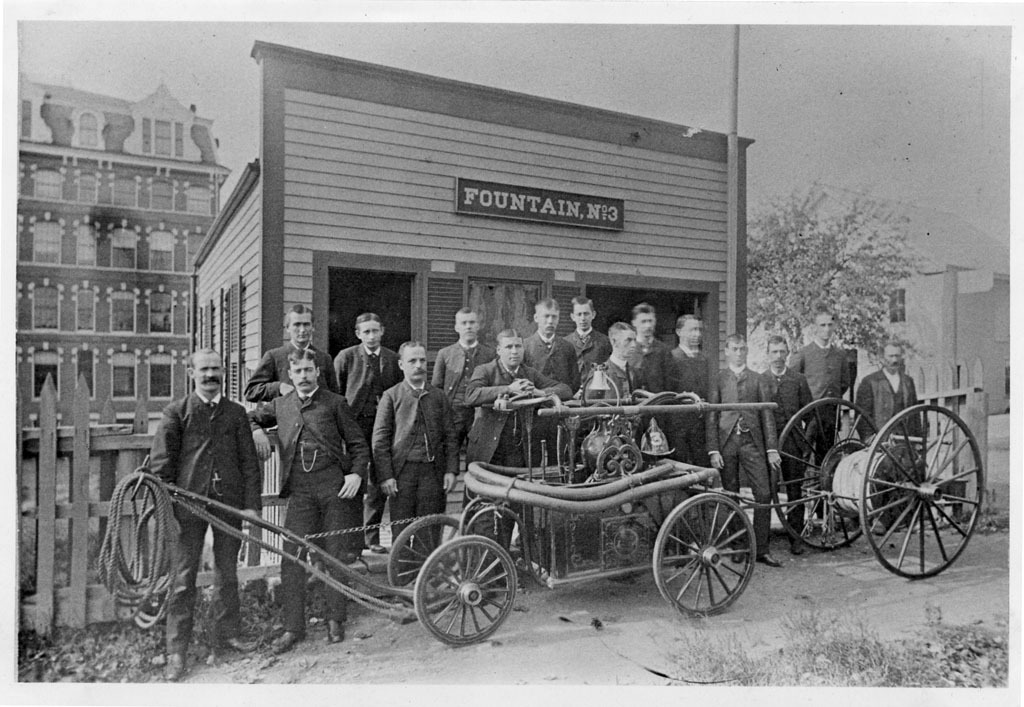
Fountain No. 3
In 1876, the Fire Department started to replace the leather and copper riveted hose with linen and cotton rubber-lined hose, a great improvement.
One of the larger fires in Wakefield’s history caused $190,000 damage to the Wakefield Rattan Factory on Water Street at 12:40 A.M. on Saturday, March 12, 1881. The alarm was sounded by blowing the factory whistle, and ringing the church bells and the Paul Revere bell in the old Town House. As the fire gained strength, help was summoned from Malden, Stoneham, Melrose and Reading. Since there were no telephones, it was necessary to send a man on horseback to each town to summon aid. Eight buildings and one dwelling were consumed by the fire. Ironically, the only building left standing with moderate fire damage was Building No. 2; the building in which the disastrous fire of 1972 originated.
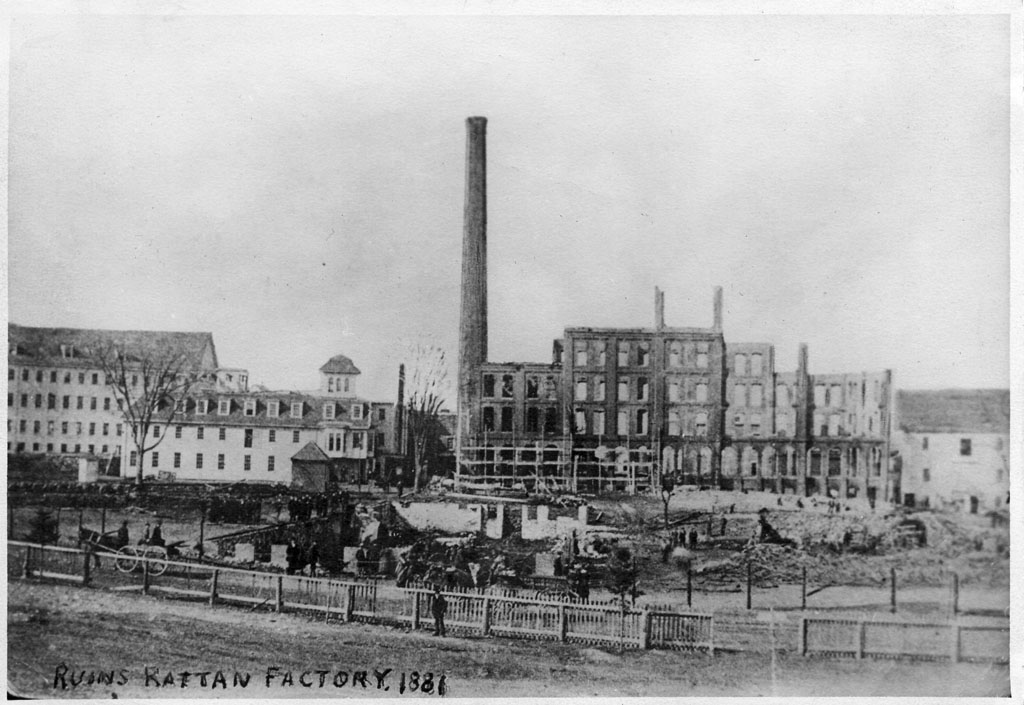
Rattan Factory Fire
In 1882, the town’s first steam fire engine was purchased from the Silsby Manufacturing Company of Seneca Falls, New York. Purchased at a cost of $3400, it was of 400-gpm capacity. After a successful pumping exhibition at Carter’s Pond at Main and Crescent Streets, the Silsby went in service as the Lucius Beebe No. 1. The new Silsby steamer was the first horse-drawn apparatus, and was painted maroon with nickel-plated parts. It was housed in the Church Street station. The town rented horses from Hathaway’s Stable on Mechanic Street to pull the steamer.
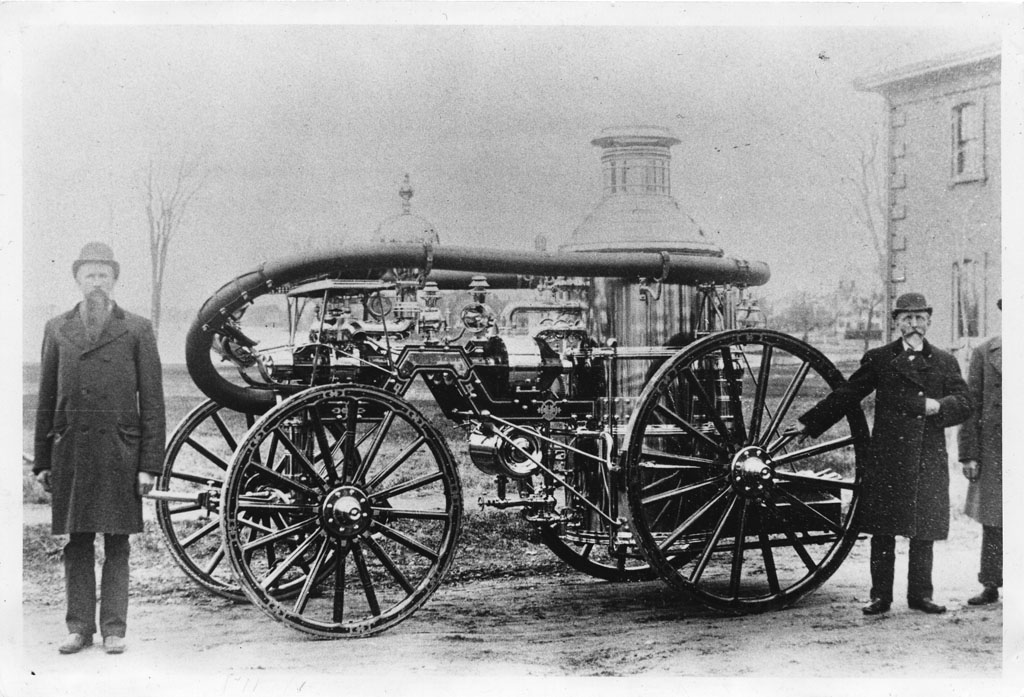
The 1882 Silsby, “Lucius Beebe No. 1”
On November 18, 1882, the Home Fire Protection Association was organized by Rufus Kendrick. The town purchased fifty Johnson pumps, made by the National Manufacturing Company. These hand-suction pumps had a four-foot or longer rubber hose, drawing water from large pails. There were 25 pumps assigned to residents and store owners for a fast attack on a fire in the business area of the center district. Other pumps were assigned in other sections of town. Various sums of money were paid for first water on certain types of fires. Over the next several years, many pumps were added until the Johnson pump brigade disbanded.
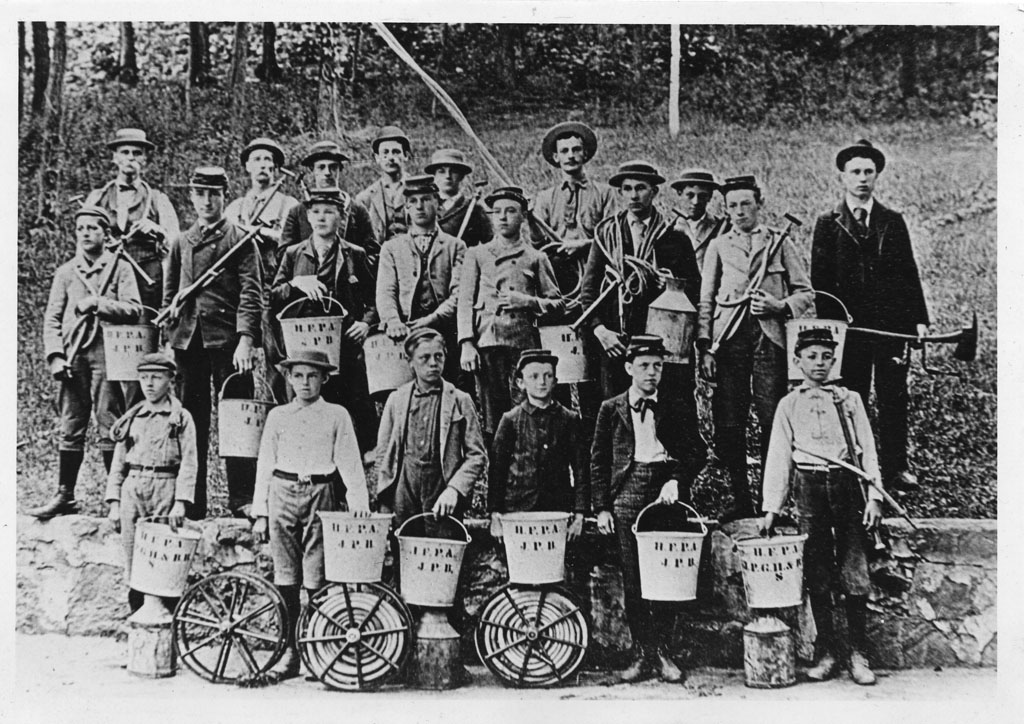
The Wakefield Home Fire Protective Association
It was found that the town’s water sources were unfit for the Silsby’s steam boiler, so the town established a contract with the Quannapowitt Water Company for a water system with 60 hydrants to be installed in the business areas. On April 23, 1883, the Quannapowitt Water Company was renamed the Wakefield Water Company, and installed the first water distribution system with 60 hydrants in service in the business area. Crystal Lake was the source of supply; a pumping station was built on Broadway with two Knowles 1750 gpm pumps. The first water was pumped through the street mains on December 1, 1883.
John E. Eaton was Chief Engineer in 1882. Charles H. Davis was Chief Engineer in 1883. James H. Carter served in the position from 1884 through 1886.