On November 13, 1906, a new horse-drawn American LaFrance combination chemical and hose wagon, with two 30-gallon chemical tanks, was put in service as Engine 1. This wagon was purchased at a cost of $1450 and was built in Seneca Falls, New York. This new American wagon replaced the 1893 Abbot-Downing hose wagon, which was repainted and reassigned to Montrose Hose 4.
Also at this time, the J. H. Carter Hose Company No. 1, located at Crescent and Lincoln Streets, was deactivated and its quarters closed. All Call personnel were transferred to the Central Fire Station.
A new Amoskeag Steamer was placed in service on December 10, 1907 as Engine 1, replacing the 1882 Silsby Steamer, which was placed in storage. The new 600gpm pumper was purchased at a cost of $5157.
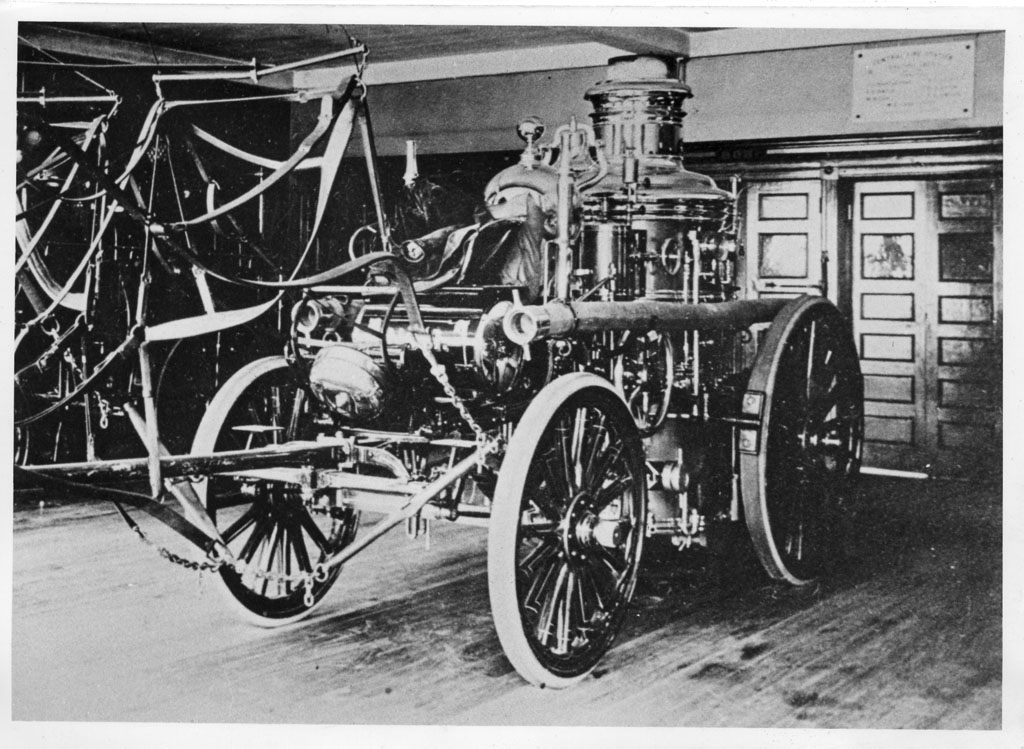
1907 Amoskeag, 600 GPM
On Easter Sunday, April 12, 1908, the city of Chelsea experienced what was to be the first of two major conflagrations in its history. This fire destroyed about 1/5 of the city and assistance was called from many communities, including Wakefield.
At 3:55 P.M., the department struck 12 blows on the bells and whistle. Engine 1, the Amoskeag steamer and the American LaFrance combination chemical and hose wagon responded to Chelsea. The apparatus left at 4 P.M., and arrived in Chelsea at 5:03 P.M. The Amoskeag started pumping at 5:15 P.M. and stopped pumping on Monday, April 13, at 1:50 P.M., a total continuous pumping time of 20 hours and 35 minutes. The apparatus returned to Wakefield at 3:40 P.M., having been out of quarters 23 hours and 40 minutes.
A major transition in the type of apparatus used took place in June 1908, when the first piece of motor driven fire apparatus east of Springfield, Mass. was put in commission in Wakefield. The Volunteer Hose No. 2 ran a five-day fair to raise the funds to purchase a 1908 Columbia, second-hand, six-passenger touring car. This vehicle was converted by Charles Waugh Co. to a hose wagon that carried 700 feet of hose and miscellaneous equipment.
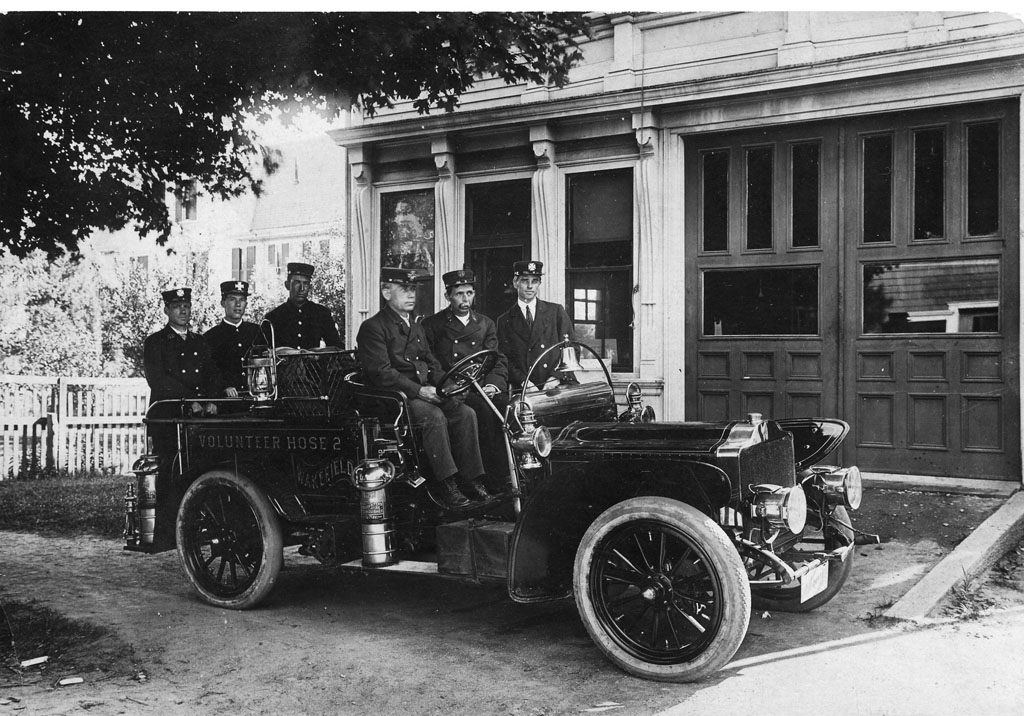
Volunteer Hose 2
This motor driven hose wagon replaced the 1888 four-wheel hand-drawn hose carriage, which was sold. This was the last hand-drawn piece of equipment in the department.
During 1908 and 1909, the town appropriated a total of $400 to purchase regulation rubber firefighting coats and metal fire helmets. This equipment replaced old Army cavalry coats, some purchased prior to 1900, in use as uniforms.
On Sunday morning, February 21, 1909, the most destructive church fire to this date in the town was reported when Box 34 was received at 8:15 A.M., followed by a second alarm at 8:40 A.M. The fire, of undetermined origins, completely destroyed the fourth meetinghouse of the First Parish Congregational Church. All that remained were the stone walls and the shell of the tower, an estimated loss of $83,000.
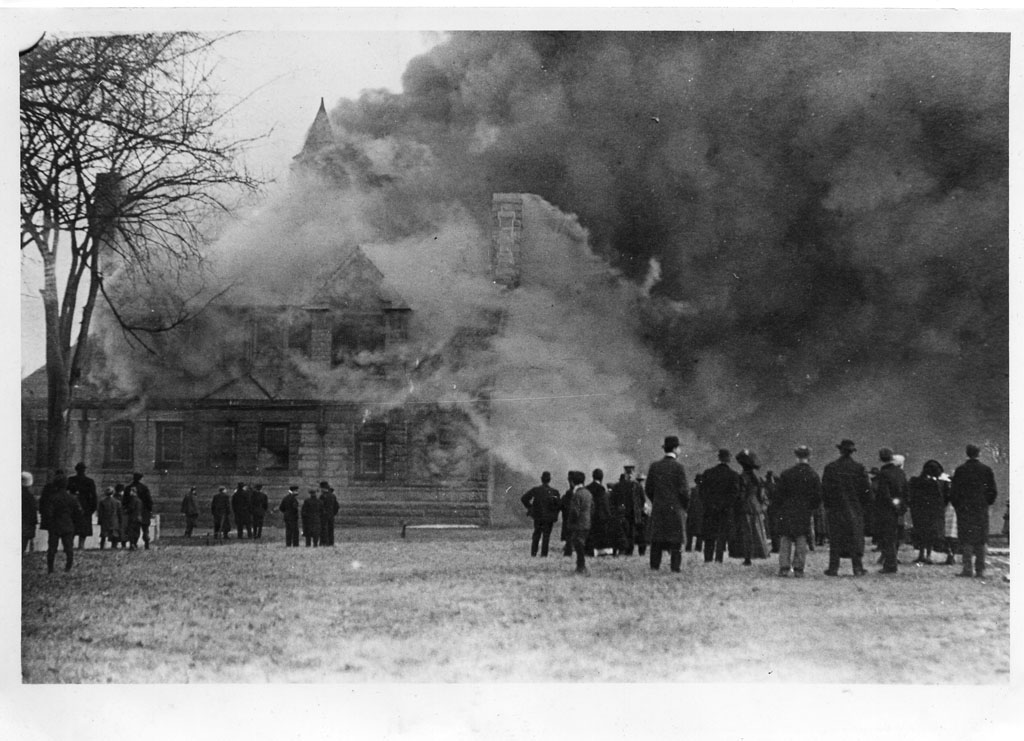
Congregational Church Fire
In 1911, the permanent fire force was increased from 4 to 5 men, with a total call-force of 47 men.