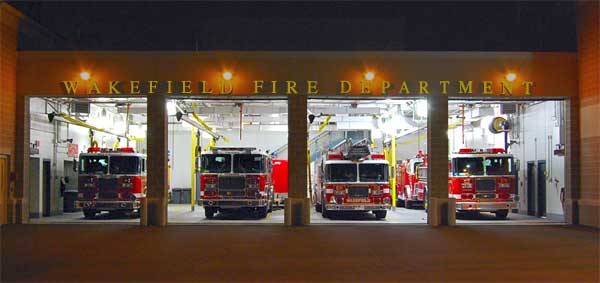
The Wakefield Fire Department responded to 234 emergency incidents during the month of February including 30 box alarms and 204 still alarms.
The Department responded to four requests for mutual aid during February, twice to Saugus, and once each to Melrose and Lynnfield. It did not receive any mutual aid in February. Wakefield Engine 2 covered a vacant Lynnfield station during an incident involving a leak in a high pressure gas main on the morning of February 27.
Winter storm Nemo struck the area on February 8-9, depositing some 27 inches of snow throughout the town. The storm created blizzard conditions, with high winds and heavy snowfall exceeding several inches an hour creating near white-out conditions. Governor Deval Patrick declared a State of Emergency as well as a ban of all non-essential traffic on all roads throughout the state. The town instituted a parking ban on all streets for most of the weekend. Wakefield implemented its Emergency Plan as the DPW struggled to keep the streets passable. Employees from the Fire, Police, DPW, Light and School Departments worked closely together to help insure the safety of Wakefield’s citizens. There were very few power outages during the storm. Fire hydrants were dug out by Fire and DPW crews until relatively warmer temperatures resulted in a significant snow melt. There was no reported damage to any public facility and no one was injured during the storm.
All department members were recertified in current CPR techniques during the month of February.
The Massachusetts Department of Fire Services issued an advisory to all fire departments in the state reminding them that the life expectancy for carbon monoxide detectors is 5-7 years. This is significant as Massachusetts first enacted a law requiring these detectors in most residential occupancies in March of 2006. As a result, detectors installed after this law was passed are now reaching the end of their useful life and need to be replaced. The department has already seen an increase in the number of responses related to carbon monoxide detectors activating. It is important to note that once the detector has reached the end of its useful life it will continue to beep even after the battery is changed.
Incident Response Report
| Emergency Medical / Motor Vehicle Accidents | 149 |
| Alarm Malfunctions / Accidental Alarms | 33 |
| Public Assistance / Service Calls | 8 |
| Investigations / Smoke Gas Odors | 10 |
| Electrical Emergencies | 0 |
| Appliance Fires / Emergencies | 0 |
| Mutual Aid Responses | 4 |
| Structural Fires | 0 |
| Heating System Emergencies | 2 |
| Water Emergencies | 7 |
| Brush / Grass Fires | 2 |
| Motor Vehicle Fires | 1 |
| Hazardous Materials Incidents | 0 |
| False Alarms | 0 |
| Carbon Monoxide Detector Investigations | 18 |
| Rubbish Fires | 0 |
| Rescue Responses | 0 |
Fire Prevention Report
| Smoke & CO Detector Certificate Inspections | 17 |
| Oil Burner Permits | 7 |
| Oil Storage Permitted (Gallons) | 1925 |
| Propane Gas Permits | 0 |
| Sprinkler System Inspection / Service Permits | 1 |
| Fire Alarm System Inspection / Service Permits | 10 |
| New Fire Protection System Permits | 5 |
| Underground Tank Removal Permits | 3 |
| Blasting & Fireworks Permits | 0 |
| Cutting & Welding Permits | 0 |
| Flammable Liquids Storage Permits | 1 |
| Tank Truck Permits | 0 |
| Fire Alarm Acceptance Tests | 4 |
| Fire Inspections Related to State / Local Licensing | 0 |
| Compliance Inspections by Fire Prevention Officer | 28 |
| Other Miscellaneous Permits | 1 |